
Are you hitting the gym consistently but still not seeing real muscle gain or fat loss? If your workouts feel too easy or repetitive, you may have reached a plateau — and the key to breaking it is increasing your workout intensity.
Whether you're trying to build lean muscle, burn fat faster, or improve endurance, your results depend heavily on how hard you challenge your body. And here’s the surprising part: boosting workout intensity isn’t just about lifting heavier weights — it’s about smart training strategies backed by science.
This guide will show you exactly how to safely increase workout intensity to accelerate muscle growth, maximize calorie burn, and get more from every gym session. Plus, you’ll learn why adding a fast-absorbing protein source like Protyze Nitro Clear Whey Protein can significantly improve recovery and performance.
What is Workout Intensity?
Workout intensity refers to how much effort you put into an exercise session. It is determined by factors such as:
- Weight lifted – Heavier weights require more effort.
- Reps and sets – Doing more reps and sets increases intensity.
- Rest time between sets – Shorter breaks make workouts more challenging.
- Heart rate – Higher intensity means a higher heart rate.
- Workout duration – More work in less time equals higher intensity.
Why Should You Increase Workout Intensity?
Increasing workout intensity has several benefits, including:
- Faster muscle growth – More resistance forces muscles to adapt and grow.
- Higher calorie burn – Intense workouts burn more calories, even after exercise.
- Stronger endurance and stamina – Pushing limits improves cardiovascular and muscular endurance.
- Avoiding plateaus – Challenging workouts prevent stagnation.
- Saving time – High-intensity workouts can be shorter yet more effective.
Now, let’s dive into the best strategies to safely increase intensity and maximize your gains.
1. Progressive Overload – The Secret to Strength and Growth
Progressive overload means gradually increasing the difficulty of your workouts so your muscles continue to grow and adapt.
How to Apply Progressive Overload
- Increase weight – Lift heavier weights as your strength improves.
- Increase reps and sets – Push beyond your comfort zone.
- Reduce rest time – Keep your heart rate up for more intensity.
- Use advanced techniques like supersets, drop sets, and time under tension.
Example: If you’re squatting 100 lbs for 10 reps, aim for 105-110 lbs next week.
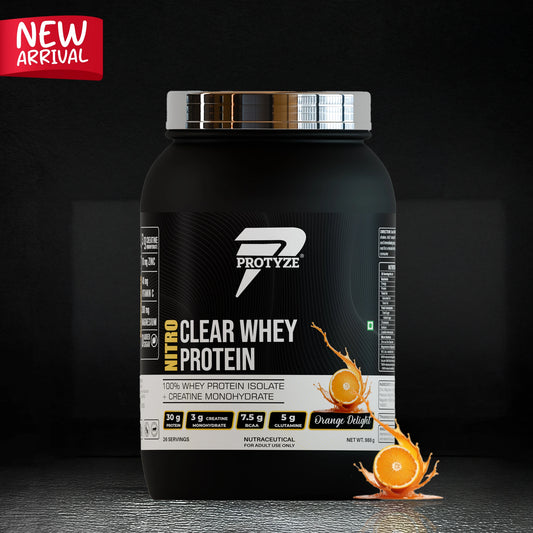
Pro Tip: Recovery is key to progressive overload. Supplementing with Protyze Nitro Clear Whey Protein ensures your muscles get 30g of high-quality protein and 3g of creatine monohydrate, helping you recover faster and lift heavier.
2. Reduce Rest Time to Keep Muscles Engaged
Resting too long between sets lowers your workout intensity. Shortening rest periods keeps your muscles working harder.
How to Reduce Rest Time for More Intensity
- Strength training: Reduce rest from 90 seconds to 45-60 seconds.
- Muscle growth: Reduce rest from 60 seconds to 30-45 seconds.
- Fat loss/HIIT: Reduce rest from 30 seconds to 15-30 seconds.
Example: If you usually take 60 seconds between sets, reduce it to 30-45 seconds to increase intensity.
3. Increase Reps and Sets for More Muscle Activation
Doing more reps and sets pushes your muscles to work harder, leading to greater endurance and growth.
Best Rep & Set Ranges for Different Goals
|
Goal |
Sets |
Reps |
Rest Time |
|
Strength |
4-5 |
3-6 |
90 sec |
|
Muscle Growth |
3-4 |
8-12 |
45 sec |
|
Endurance |
3-4 |
12-20 |
30 sec |
Example: Instead of 3 sets of 10 reps, try 4 sets of 12 reps for increased intensity.
4. Use Supersets and Drop Sets for Maximum Fatigue
What is a Superset?
A superset is when you perform two exercises back-to-back without rest.
Example Superset:
- Bicep Curls → Triceps Dips
What is a Drop Set?
A drop set involves lifting a heavy weight until failure, then reducing the weight and continuing without rest.
Example Drop Set:
- Dumbbell Shoulder Press – Start with 30 lbs, then drop to 20 lbs, then 10 lbs.
These techniques increase intensity by keeping muscles under constant tension.
5. High-Intensity Interval Training (HIIT) for Maximum Fat Burn
HIIT workouts burn more fat in less time by alternating intense bursts of exercise with short rest periods.
Example HIIT Routine (Repeat 3x)
- 30 sec Jump Squats
- 30 sec Push-Ups
- 30 sec Burpees
- 30 sec Mountain Climbers
Take 15-30 sec rest between rounds.
6. Slow Down Reps to Increase Time Under Tension (TUT)
TUT means slowing down each movement to keep muscles engaged for longer.
Example: Instead of 1 second up, 1 second down, try 3 seconds up, 3 seconds down.
TUT increases muscle breakdown and strength gains without adding extra weight.
7. Train to Failure for Maximum Muscle Growth
Training to failure means performing reps until you physically can’t continue with good form.
Example: If you're doing bicep curls, continue until you can’t lift the weight anymore.
Warning: Only train to failure on 1-2 exercises per session to avoid overtraining.
8. Increase Workout Frequency for More Gains
If you're working out 3 days a week, increasing to 4 or 5 days can improve results.
Example Weekly Workout Plan
- Day 1: Upper Body
- Day 2: Lower Body
- Day 3: Cardio & Core
- Day 4: Full Body
9. Add Resistance Bands and Weighted Gear for Extra Challenge
Using resistance bands or weighted vests makes bodyweight exercises more intense.
Example:
- Push-ups with a resistance band
- Weighted vest for squats or lunges
10. Track Your Progress to Stay Motivated
Why Tracking Helps?
- Keeps you motivated
- Shows what’s working
- Helps you set clear goals
Example Progress Chart
|
Week |
Squats (lbs) |
Reps |
Rest Time |
|
1 |
100 |
10 |
60 sec |
|
2 |
110 |
12 |
45 sec |
|
3 |
120 |
12 |
30 sec |
Conclusion
If you want faster results — stronger muscles, higher endurance, or quicker fat loss — increasing your workout intensity is one of the most effective changes you can make. By lifting progressively heavier, reducing rest time, using supersets or HIIT, and pushing your muscles harder each week, you’ll break plateaus and speed up your transformation.
But training harder also means your body needs the right fuel. Choosing a clean, fast-digesting protein such as Protyze Anytime Clear Whey Protein or Protyze Nitro Clear Whey Protein helps support muscle recovery, lean muscle gain, and performance — making your high-intensity workouts even more effective.
Stay consistent, challenge yourself every session, and let the combination of strategic training and best whey protein supplementation take your fitness results to the next level.
Frequently Asked Questions (FAQs)
1. Is it safe to increase workout intensity?
Yes, but always increase gradually and prioritize proper form to avoid injuries.
2. Can I increase intensity without lifting heavy?
Yes! Try HIIT, supersets, drop sets, and reducing rest time to boost intensity.
3. How do I know if my workout is intense enough?
You should feel challenged but not exhausted. If you easily finish a workout, increase intensity.
4. How long does it take to see results?
With consistent high-intensity workouts, results can be seen in 4-6 weeks.
5. What should I eat to support intense workouts?
A balanced diet with protein, healthy fats, and complex carbs fuels performance and recovery.
6. Does whey protein help increase workout intensity and performance?
Yes. Whey protein improves recovery, boosts strength, and reduces muscle fatigue — helping you train harder and maintain higher workout intensity.
7. How much whey protein should I take when increasing workout intensity?
Take 25–30g of whey protein post-workout to support muscle repair and performance during high-intensity training.