
Short answer:
No, protein shakes don't dehydrate you on their own. A shake is mostly water. But eating more protein raises how much water your body needs, so if your fluid intake stays the same while your protein goes up, you can end up mildly dehydrated.
Most gym-goers track grams of protein carefully and forget about water. You drink your shake, follow your split, hit your protein target, and still feel flat. That's often a hydration problem, not a protein problem.
If you take protein regularly but notice any of these, hydration may be the missing piece:
- Tiring early during workouts
- Slow recovery and lingering soreness
- Feeling heavy or bloated after a shake
- Muscle cramps, headaches or constant thirst
This guide answers the questions people search most about protein and hydration: whether protein shakes, drinks and powder dehydrate you, how much water to mix with whey, whether you can drink water right after a shake, and which protein drinks support both recovery and hydration.
Can Protein Dehydrate You?
Protein can increase your water needs, which can lead to dehydration if you don't drink more. It isn't the protein itself that pulls water out of you; it's how your body processes it.
When you digest protein, your body breaks it into amino acids. Amino acids your muscles don't use are broken down further, and the nitrogen they contain is converted into urea in the liver. Your kidneys flush urea out in urine, and that takes water. More protein means more urea, which means more water leaving your body.
This is why people who suddenly jump to a high-protein diet often notice:
- More thirst than usual
- Darker urine
- More frequent bathroom trips
- Headaches or low energy, especially in hot weather
For healthy people, this is easy to manage: drink more water as your protein goes up. If you have a kidney condition, talk to your doctor before increasing protein significantly.
Why hydration matters for muscle growth
Muscle tissue is roughly 75% water, so even mild dehydration shows up in the gym. Losing as little as 2% of your body weight in fluid can reduce strength, endurance and focus.
Water is what carries amino acids through your bloodstream to your muscles. It also keeps muscle contractions smooth and helps regulate body temperature during training. Protein supplies the building blocks; water delivers them. You need both working together.
Does Protein Powder Dehydrate You? And Do Protein Drinks?
Neither protein powder nor ready-to-drink protein beverages dehydrate you when you take them with enough fluid. What matters is your total daily protein and total daily water, not the format.
A few things can make a protein drink feel less hydrating than it should:
- Mixing with too little water. A thick, concentrated shake gives you protein without much fluid.
- High caffeine. Some pre-workout-style protein drinks add caffeine, which has a mild diuretic effect at high doses.
- Very high protein per day. Multiple shakes on top of a protein-heavy diet adds up to more urea to flush out.
- Skipping water elsewhere. Many people treat their shake as their "drink" and forget plain water.
The fix isn't to cut protein. It's to pair it with enough water and, if you sweat a lot, electrolytes.
Do Protein Shakes Hydrate You?
Yes, partly. The water or milk you mix your protein into counts toward your daily fluid intake. A 300 ml shake gives you roughly 300 ml of fluid.
But a regular protein shake isn't a hydration drink. It doesn't replace the sodium and potassium you lose in sweat, and thick, milky shakes are hard to drink in large amounts after a hot workout. So most people get some fluid from their shake, but not enough to cover what training and a higher protein intake demand.
A protein drink that also contains electrolytes, and is light enough to drink comfortably, does a better job of covering both needs at once. More on that below.
In How Much Water Should I Take Whey Protein?
Mix one scoop (about 25–30 g) of whey protein in 200–300 ml of water. Use less for a thicker shake, more for a lighter one. Always check the label, since serving sizes vary between brands.
|
Whey type |
Water per scoop |
Texture |
|---|---|---|
|
Whey concentrate |
200–250 ml |
Creamy, thicker |
|
Whey isolate |
250–300 ml |
Lighter, smoother |
|
Clear whey isolate |
300–500 ml |
Juice-like, refreshing |
On top of the water in the shake itself, aim to drink an extra glass or two of water (about 300–500 ml) over the following hour. That covers the extra fluid your body uses to process the protein.
Water or milk? Water gives you faster digestion and fewer calories, which suits post-workout recovery and fat loss. Milk adds calories, carbs and extra protein, which suits bulking. Both count toward hydration.
Can I Drink More Water Straight After My Protein Shake?
Yes. Drinking water right after a protein shake is safe and helpful. It won't "dilute" the protein or stop your body from absorbing it; your digestive system handles that regardless of how much water is around.
A few practical tips:
- Sip, don't chug. Drinking a large volume at once on top of a full shake can make you feel bloated. Spread it over 30–60 minutes.
- Rehydrate based on sweat. After a heavy session, drink roughly 1.25–1.5 litres of fluid for every kilogram of body weight you lost during training. Weigh yourself before and after a few workouts to learn your sweat rate.
- Add electrolytes if you sweat heavily. Plain water alone can leave you short on sodium after long or hot workouts.
How Much Water Do Gym-Goers Need Per Day?
Most active adults need 2.5–4 litres of fluid a day, depending on body weight, training intensity and climate. Treat these as starting points and adjust to thirst and urine colour (pale yellow is the goal).
|
Activity level |
Daily fluid (approx.) |
|---|---|
|
Moderately active |
2.5–3 L |
|
Regular gym training (4–6 days/week) |
3–4 L |
|
Heavy training or hot, humid weather |
4 L or more |
In much of India, summer temperatures and humidity mean you sweat more even during a normal session, so lean toward the higher end.
Don't forget electrolytes
Sweat isn't just water. You also lose sodium, potassium and magnesium, which help your body hold on to fluid and keep muscles contracting properly. Low electrolytes after heavy sweating can show up as cramps, dizziness or unusual fatigue, even if you've been drinking water.
If you train hard, sweat heavily or work out in the heat, an electrolyte drink or an electrolyte-fortified protein drink helps you rehydrate more effectively than water alone.
Looking for a Protein Drink That Supports Muscle Recovery, Digestion and Hydration?
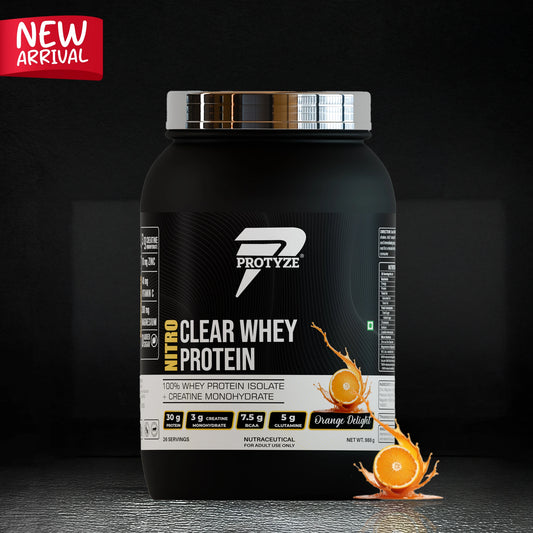
Clear whey protein is the closest fit. It's a highly filtered whey isolate that mixes into a light, translucent, juice-like drink instead of a thick milkshake.
Traditional whey works well for recovery, but many people find thick, creamy shakes hard to drink after a sweaty session in 35°C heat. That often means they drink less fluid overall. Clear whey solves this by behaving more like a sports drink than a shake.
|
|
Traditional whey shake |
Clear whey |
|---|---|---|
|
Texture |
Thick, creamy, milky |
Light, juice-like |
|
Typical water per scoop |
200–300 ml |
300–500 ml |
|
Feel after a hot workout |
Can feel heavy |
Refreshing, easy to finish |
|
Lactose and fat |
Higher in concentrate |
Very low (isolate) |
|
Hydration contribution |
Moderate |
Higher, more so with added electrolytes |
Because clear whey is an isolate, it's low in lactose and fat, so many people find it easier on the stomach and less bloating than regular concentrate. It's also digested quickly, which makes it a good post-workout option.
Hydra Clear Whey: Protein and Hydration in One Drink
Hydra Clear Whey by Protyze combines whey isolate with electrolytes, so one drink covers your post-workout protein and helps replace what you lose in sweat. It mixes into a light, juice-like drink rather than a heavy shake.
What you get per serving:
- 24 g whey isolate protein for muscle repair
- Electrolytes to support fluid balance after sweating
- Fast digestion for post-workout recovery
- A light, refreshing texture that's easy to finish, even in summer
It's built for exactly the problem this guide covers: getting enough protein without falling behind on fluids. Instead of choosing between a protein shake and an electrolyte drink, you get both in one glass.
Who Should Try a Hydration-Focused Clear Whey?
- Gym-goers who find regular protein shakes too thick or heavy
- People training in hot, humid weather or non-air-conditioned gyms
- Heavy sweaters and endurance athletes
- Anyone who feels bloated after milk-based shakes
- People who struggle to drink enough water through the day
7 Tips to Stay Hydrated While Taking Protein
- Drink water steadily through the day instead of in one big burst.
- Add 300–500 ml of extra water around each protein shake.
- Increase fluids on heavy training days and hot days.
- Use electrolytes if you sweat a lot or train longer than an hour.
- Check your urine colour: pale yellow means you're on track.
- Choose lighter protein formats like clear whey in summer.
- Have your protein within a couple of hours after training to support recovery.
Frequently Asked Questions
Do protein shakes dehydrate you?
No. Protein shakes contain water and add to your fluid intake. However, a higher protein intake raises your body's water needs, so drink extra water as your protein goes up.
Do protein drinks dehydrate you?
Not when taken with enough fluid. Watch for ready-to-drink options with high caffeine, and make sure protein drinks aren't replacing plain water in your day.
Can protein dehydrate you?
It can if your water intake doesn't keep up. Your kidneys use water to flush out urea, a by-product of protein breakdown, so very high protein with low fluid can lead to mild dehydration.
Does protein powder dehydrate you?
Protein powder itself doesn't dehydrate you. Mix it with enough water (250–300 ml per scoop for most whey) and drink an extra glass afterwards.
Do protein shakes hydrate you?
Partly. The liquid in your shake counts toward daily fluids, but most shakes lack electrolytes. A clear whey with electrolytes contributes more to hydration.
In how much water should I take whey protein?
Use 200–300 ml of water per 25–30 g scoop of regular whey, or 300–500 ml for clear whey. Follow the brand's label for the exact amount.
Can I drink more water straight after my protein shake?
Yes. It won't affect protein absorption. Sip it over 30–60 minutes to avoid feeling bloated.
What is a good protein drink that supports muscle digestion and hydration?
A clear whey isolate with added electrolytes, such as Hydra Clear Whey. It's light, low in lactose, digests quickly and helps replace fluids and electrolytes lost in sweat.
Final Thoughts
Protein shakes don't dehydrate you, but more protein does mean your body needs more water. If you're hitting your protein targets and still feeling tired, crampy or slow to recover, look at your fluid and electrolyte intake before changing anything else.
Mix your whey with enough water, drink extra afterwards, add electrolytes when you sweat heavily, and choose lighter formats when the weather heats up.
If you want one drink that handles both, Hydra Clear Whey gives you 24 g of whey isolate plus electrolytes in a light, refreshing format made for post-workout recovery and hydration.
This article is for general information and isn't medical advice. If you have kidney disease or another health condition, consult your doctor before increasing your protein intake.