
Short answer:
Your body needs both, but for different jobs. Creatine helps rebuild strength and power over time. Electrolytes replace the minerals you lose in sweat so you can rehydrate properly. And neither one replaces protein, which is what actually repairs muscle after training.
Walk into any gym and you'll hear the debate: should your post-workout drink be creatine or electrolytes? Supplement shelves make it look like you have to pick one. In reality, they solve different problems, and the smartest recovery routine covers protein, creatine and hydration together.
Here's what each one does, how they compare, and how to get the most from your post-workout recovery.
What Does Creatine Do After a Workout?
Creatine is one of the most researched sports supplements in the world. Your muscles store it as phosphocreatine, which they use to quickly regenerate ATP, the energy behind short, intense efforts like lifting, sprinting and jumping.
Taking creatine monohydrate daily (typically 3–5 g) gradually tops up these stores. Over weeks, that can help you:
- Push out an extra rep or two per set
- Build strength and lean muscle faster
- Recover better between sets and sessions
Creatine works by saturation, not instant effect. Consistency matters more than timing, but taking it after training alongside protein and carbohydrates is an easy habit to stick with.
What Do Electrolytes Do After a Workout?
Electrolytes are minerals such as sodium, potassium and magnesium. They carry the electrical signals that make muscles contract and help your body hold on to the water you drink.
When you sweat, you lose fluid and electrolytes together, sodium most of all. Replace only the water, and your body struggles to retain it. That's why heavy sweaters can drink plenty and still feel drained, crampy or dizzy.
Electrolytes matter most when you:
- Train for over an hour or at high intensity
- Work out in hot, humid weather
- Sweat heavily or see salt marks on your clothes
Creatine vs Electrolytes: Key Differences
|
|
Creatine |
Electrolytes |
|---|---|---|
|
Main job |
Strength, power, muscle growth |
Hydration, fluid balance, muscle function |
|
How fast it works |
Builds up over 3–4 weeks of daily use |
Works within the same session or day |
|
Best for |
Lifting, sprints, high-intensity training |
Long, hot or sweaty workouts |
|
Take it |
Every day, including rest days |
Around training and on hot days |
The takeaway: creatine is a long-term performance tool, while electrolytes are a same-day hydration tool. One doesn't replace the other.
Does Creatine Dehydrate You?
No. This is one of the most common myths. Research hasn't found that creatine causes dehydration or cramps in healthy people. Creatine actually draws water into your muscle cells, which is part of how it supports performance.
Because creatine pulls water into muscle, it makes sense to drink plenty of fluids while taking it, especially in hot weather.
Can you take creatine and electrolytes together?
Yes, and they work well together. Creatine supports strength and muscle growth; electrolytes keep you properly hydrated. Pair them with protein after training and you've covered the three biggest recovery needs.
Why Clear Whey Protein With Creatine Is a Smarter Post-Workout Drink
Instead of mixing three separate tubs after every session, a clear whey protein with creatine puts your two biggest muscle-building needs in one glass.
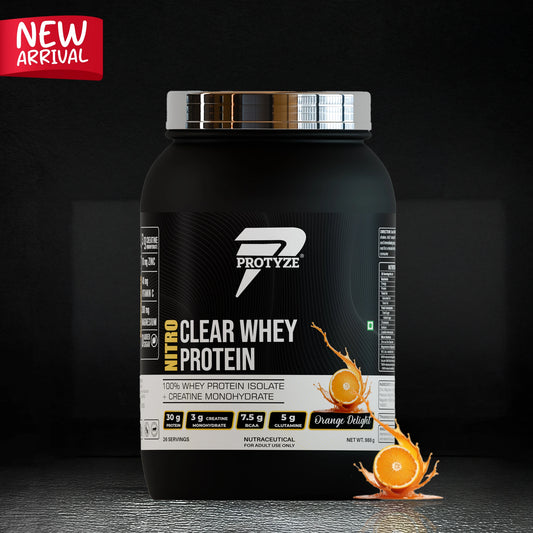
[Product name] by Protyze combines fast-digesting whey isolate with creatine monohydrate in a light, juice-like drink:
- 30 g whey isolate protein to repair and rebuild muscle
- 3 g creatine monohydrate to support strength and power
- Clear, refreshing texture that's easy to finish after a hot, sweaty session
- Low lactose and low fat, so it's lighter on the stomach than milky shakes
Because clear whey mixes with more water than a regular shake, every serving also adds to your daily fluid intake. That matters when creatine is pulling water into your muscles.
Your Simple Post-Workout Recovery Routine
- Within 1–2 hours of training: Have one serving of clear whey with creatine mixed in 300–500 ml of cold water.
- Rehydrate: Keep sipping water over the next hour. Add electrolytes if your session was long, hot or very sweaty.
- Eat a real meal: Include carbs and protein to refuel energy stores.
- On rest days: Keep taking creatine daily to maintain muscle saturation.
Frequently Asked Questions
Is creatine or electrolytes better after a workout?
Neither is "better"; they do different jobs. Creatine supports strength over time, while electrolytes help you rehydrate. Most active people benefit from protein and creatine daily, plus electrolytes on sweaty days.
Can I mix creatine with whey protein?
Yes. Creatine and whey protein work well together, which is why clear whey with creatine combines both in one serving.
Do I need electrolytes if I take creatine?
Not always. If your workouts are short and you drink enough water, food may cover your electrolytes. For long, hot or high-sweat sessions, adding electrolytes helps.
Is clear whey with creatine good for beginners?
Yes. It's a simple way to cover protein and creatine without juggling multiple supplements.
Final Thoughts
The creatine vs electrolytes debate has a simple answer: your body needs protein to repair muscle, creatine to build strength, and fluids with electrolytes to stay hydrated. Skip any one, and recovery suffers.
The easiest way to cover the first two is a clear whey protein with creatine. Then keep drinking water and add electrolytes when you sweat heavily.
Shop Protyze Clear Whey with Creatine →
This article is for general information only. If you have a kidney condition or other health concern, speak to your doctor before starting creatine or protein supplements.