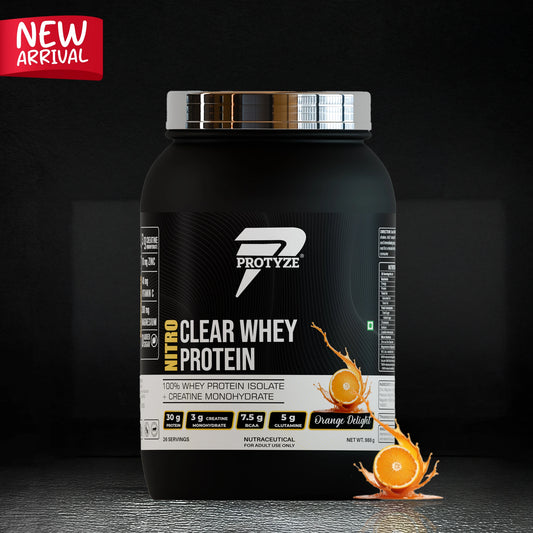

If you have just bought your first tub of whey, one question comes up quickly: how much protein in 1 scoop of whey are you actually getting? The label lists a serving size, but the scoop inside the tub does not always match it, and numbers change between brands and types.
In this guide, we break down the calories, protein, carbs and fat in 1 scoop of protein powder. You will also learn the standard scoop size of whey protein in grams, how milk changes the numbers, and how many scoops you really need in a day.
How Much Protein Is in 1 Scoop of Whey?
Most whey proteins give 22–27 g of protein per scoop. The exact amount depends on the type of whey and the scoop size your brand uses.
- Whey concentrate: about 22–25 g protein per 30–33 g scoop (roughly 70–80% protein).
- Whey isolate: about 25–27 g protein per 30–32 g scoop (roughly 85–90% protein).
- Whey blend (concentrate + isolate): usually 24–25 g protein per scoop.
So if your label says "24 g protein per serving", that is what one level scoop of whey protein delivers, as long as the scoop matches the serving size printed on the tub.
1 Scoop Whey Protein Nutrition (Full Breakdown)
Here is the typical 1 scoop whey protein nutrition for a single serving mixed with water. Values vary by brand, so always check your product label.
|
Nutrient (per scoop) |
Whey concentrate (~33 g) |
Whey isolate (~30 g) |
|---|---|---|
|
Calories |
120–130 kcal |
105–115 kcal |
|
Protein |
22–25 g |
25–27 g |
|
Carbohydrates |
3–5 g |
1–2 g |
|
Sugar |
1–3 g |
under 1 g |
|
Fat |
1.5–2.5 g |
0–1 g |
|
Lactose |
2–4 g |
under 1 g |
Whey isolate is filtered further, so it has more protein and less carbs, fat and lactose in each scoop. Concentrate is usually cheaper and tastes creamier, which is why many people in India start with it.
What Is the Standard Scoop Size of Whey Protein?
The standard scoop size of whey protein is 30–35 g of powder. Some brands use smaller 25 g scoops, while mass gainers use scoops of 75 g or more.
The scoop is measured by volume, but the label is based on weight. A heaped scoop can hold 5–10 g more powder than a level one, which adds 20–40 extra calories. Flavoured powders with cocoa or added fibre can also weigh differently from unflavoured ones.
Tip: weigh your scoop on a kitchen scale once. If one level scoop of protein powder matches the serving weight on the label, you can trust the numbers every time.
Calories in Whey Protein One Scoop: Water vs Milk
What you mix your shake with can double its calories. Here is how whey protein one scoop (concentrate, ~33 g) changes with 250 ml of liquid:
|
Mixed with (250 ml) |
Total calories |
Total protein |
|---|---|---|
|
Water |
120–130 kcal |
22–25 g |
|
Toned milk (3% fat) |
270–280 kcal |
30–33 g |
|
Full-cream milk |
290–300 kcal |
30–33 g |
|
Unsweetened almond milk |
150–160 kcal |
23–26 g |
Water is best if you are cutting fat or want fast digestion after a workout. Milk suits people trying to gain weight or muscle, since it adds extra protein and calories.
How Many Scoops of Whey Protein Should You Take a Day?
Most people need just 1–2 scoops a day. Whey is a supplement to fill the gap between the protein you eat and the protein you need, not a meal replacement.
Active adults who train regularly generally aim for about 1.6 g of protein per kg of body weight. For a 70 kg person, that is roughly 110 g a day. If your meals of dal, paneer, eggs, curd or chicken already give you 80–85 g, one scoop easily covers the rest.
If you have kidney problems or any medical condition, check with your doctor before adding a protein supplement.
FAQ'S
How many calories are in 1 scoop of whey protein?
One scoop typically contains 70–200 calories, depending on the protein type and ingredients.
Which whey protein has the lowest calories?
Clear whey protein and whey isolate generally have fewer calories and a higher protein-to-calorie ratio.
Is clear whey protein lower in calories than regular whey protein?
Yes, clear whey is typically lower in calories because it contains minimal fat and carbohydrates.
Does mixing whey protein with milk increase calories?
Yes. Milk adds extra calories from protein, carbohydrates, and fat. Mixing with water keeps the calories lower.
Can whey protein help with weight loss?
Yes. It can support weight loss by helping with fullness, muscle maintenance, and meeting daily protein needs.
How much protein is in one scoop of whey protein?
Most whey powders provide 20–30g of protein per scoop, depending on the product and serving size.
What affects the calorie content of whey protein?
Protein type, serving size, fats, carbohydrates, sugars, and added ingredients can all affect calorie content.
What is a good protein-to-calorie ratio for whey protein?
A product providing 20–30g protein with fewer than 130 calories per serving offers a high protein-to-calorie ratio.
Conclusion
One scoop of whey protein gives you about 22–27 g of protein and 105–130 calories, depending on the type and brand. The standard scoop size is 30–35 g, but weighing it once is the easiest way to know your real numbers.
Looking for a good brand to start with? See our list of the best whey proteins in India for 2026.