
Building muscle requires more than lifting weights at the gym. It involves consistent resistance training, adequate protein intake, balanced nutrition and sufficient recovery.
Protein plays an important role in muscle repair, maintenance and growth. However, meeting your daily protein requirements through regular meals can sometimes be challenging, particularly if you have a busy schedule or higher nutritional needs.
This is where protein supplements can help.
With so many isolate protein products available in India, choosing the right one can be confusing. Should you focus on protein content, amino acids, ingredients or serving size? How much protein do you actually need to build muscle? And when should you consume it?
This guide explains how to select an appropriate protein supplement, calculate your daily requirements and incorporate protein into a muscle-building nutrition routine.
Quick answer: Choose an isolate protein based on its protein content, amino acid profile, ingredient transparency, quality information and suitability for your daily nutritional requirements. Most importantly, select a product that complements your diet and training routine.
1. Understand Your Daily Protein Requirements
Before purchasing a protein supplement, understand how much protein your body needs.
Protein supplies amino acids that support muscle repair and maintenance. When combined with resistance training, adequate protein intake helps your body adapt to exercise and build muscle.
Your daily protein requirements depend on:
- Body weight.
- Training frequency and intensity.
- Fitness goals.
- Overall calorie intake.
- Individual health and nutritional needs.
For many exercising adults, approximately 1.4–2.0g of protein per kilogram of body weight per day is a commonly cited range for supporting muscle development and maintenance.
Daily Protein Requirement by Body Weight
| Body weight | Illustrative daily protein range |
|---|---|
| 50kg | 70–100g |
| 60kg | 84–120g |
| 70kg | 98–140g |
| 80kg | 112–160g |
| 90kg | 126–180g |
These are general estimates, not personalized prescriptions.
For example, a person weighing 70kg who exercises regularly may use 98–140g as a starting reference for planning daily protein intake.
However, not all protein needs to come from supplements.
Foods such as eggs, milk, curd, paneer, chicken, fish, soybeans, tofu and lentils can contribute significantly to your daily requirements.
2. Seven Factors to Consider When Choosing Isolate Protein
You do not need to compare dozens of technical specifications to make a sensible purchasing decision. Start with these seven essentials.
1. Protein per Serving
Check how much actual protein you receive in one serving, rather than relying only on the number displayed on the front of the pack.
Also compare serving sizes.
For example, a product providing 27g protein in a 30g serving has a protein concentration of 90%.
Protein concentration = (Protein per serving ÷ Serving size) × 100
A higher percentage can be useful for comparison, but it does not automatically mean better overall quality.
2. Essential Amino Acid Profile
Look for information about essential amino acids, particularly leucine, which plays an important role in stimulating muscle protein synthesis.
A complete protein source supplies all nine essential amino acids.
Do not assume that additional BCAAs automatically make a product superior.
3. Ingredients and Nutritional Composition
Read the ingredient list and nutrition panel to understand the protein source, sweeteners and other added ingredients.
Also check the carbohydrates, sugars, fat and calories per serving, particularly if you are following a specific nutrition plan.
4. Quality and Testing Transparency
Check the manufacturer's details, relevant FSSAI declarations, batch information and available quality documentation.
If third-party laboratory reports are available, verify that they relate to the actual product and batch.
5. Price per Gram of Protein
Compare the amount of protein you receive for the money you spend.
Cost per 25g protein = Cost per serving × (25 ÷ Protein per serving)
This is more useful than comparing only the price of two different packs.
6. Taste and Mixability
Choose a flavour and format that you enjoy.
Some people prefer conventional creamy shakes, while others prefer lighter, fruit-flavoured drinks. Taste and convenience can influence whether you consistently include a supplement in your routine.
7. Suitability for Your Daily Routine
Consider whether the product fits your dietary preferences, nutritional requirements and schedule.
A supplement should make meeting your protein requirements easier, not complicate your routine.
3. How to Distribute Protein Throughout the Day
Meeting your total daily protein requirement is important, but how you distribute your protein across meals is also worth considering.
Instead of consuming most of your protein in one meal, try to include a meaningful protein source across breakfast, lunch, snacks and dinner.
For example, someone with a daily target of approximately 120g could plan their intake as follows:
| Meal | Illustrative protein target |
|---|---|
| Breakfast | 25g |
| Lunch | 30g |
| Evening snack | 25g |
| Dinner | 30g |
| Additional snack, if required | 10g |
| Total | 120g |
These are illustrative targets, not fixed meal prescriptions.
Your actual intake should depend on your appetite, food choices, training and nutritional requirements.
Protein-Rich Food Options in India
You can build a protein-rich diet using familiar foods.
| Food | Protein contribution |
|---|---|
| Eggs | Complete protein source |
| Milk and curd | Dairy protein |
| Paneer | Dairy protein |
| Chicken and fish | Animal protein |
| Soybeans and tofu | Plant protein |
| Dal and legumes | Plant protein |
The actual protein content varies with portion size and preparation.
Combining different protein-rich foods throughout the day can help you meet your requirements without depending entirely on supplements.
4. Protein from Food vs Supplements: What Should You Choose?
Regular food should remain the foundation of your nutrition.
Whole foods provide protein along with other nutrients that contribute to a balanced diet.
However, there may be situations where meeting your protein requirements through meals alone is difficult.
For example:
- You have a busy work schedule.
- Your meals are consistently low in protein.
- You have higher protein requirements because of regular training.
- You need a convenient option between meals.
- You find it difficult to prepare protein-rich meals regularly.
In these situations, protein supplements can help fill the nutritional gap.
The important thing is to calculate how much protein you already consume before deciding how much additional protein you need.
5. How to Choose Protein Based on Your Fitness Goal
Your fitness goal should influence your nutritional choices.
For Muscle Gain
If your objective is to build muscle, focus on:
- Meeting your daily protein requirements.
- Following progressive resistance training.
- Eating sufficient calories to support your training goals.
- Getting adequate sleep and recovery.
- Maintaining consistency over time.
A protein supplement can help you meet your daily protein target when food intake is insufficient.
For Lean Muscle Development
If you want to develop muscle while managing overall body fat, pay attention to your total calorie intake as well as your protein intake.
Consider the protein content, calories, carbohydrates and fat in your overall diet.
A protein supplement does not directly burn fat. Changes in body composition depend on your nutrition, training and recovery.
For Beginners
If you are new to the gym, do not start by purchasing multiple supplements.
First understand your body weight, daily protein intake and training routine.
If you already meet your protein requirements through regular meals, additional supplementation may not be necessary.
If there is a gap, choose a convenient protein source that fits your budget and dietary preferences.
6. When Should You Consume Protein?
There is no single mandatory time to consume protein.
You can include it at different points throughout your day.
After a workout: A convenient opportunity to consume protein following resistance training.
Between meals: Useful when your regular meals do not provide sufficient protein.
At breakfast: An option if your morning meal is relatively low in protein.
On rest days: Protein continues to support muscle repair and maintenance even when you are not exercising.
Your total daily protein intake and consistency generally matter more than following a strict supplement schedule.
7. Is Clear Protein a Good Option for Muscle Gain?
Protein supplements are available in different formats.
Traditional protein shakes are often thick and creamy, while clear protein products are designed to create a lighter, fruit-flavoured drink when mixed with water.
Clear protein is generally formulated using whey protein isolate as its protein source. Its main distinction is the beverage-style formulation and drinking experience.
It does not automatically build more muscle than another complete protein source.
Why Do Some People Prefer Clear Protein?
Clear protein may appeal to consumers who:
- Do not enjoy thick and creamy shakes.
- Prefer fruit-inspired flavours.
- Want a lighter drink after exercising.
- Prefer mixing their protein with water.
- Want variety in their daily supplementation routine.
Where Does Protyze Fit In?
Protyze is an Indian nutrition brand focused on making protein supplementation more refreshing and convenient through clear whey protein isolate formulations.
Unlike conventional creamy protein shakes, Protyze offers a water-based, fruit-flavoured protein drink experience.
Its Anytime Clear Whey Isolate provides 24g of protein per serving, according to its stated product specification.
What Makes Protyze Different?
1. Refreshing Clear Protein Format
Protyze offers a lighter, fruit-flavoured alternative to traditional creamy protein shakes.
2. 24g Protein per Serving
Anytime Clear Whey Isolate provides 24g protein per serving, helping consumers add a convenient protein source to their daily nutrition routine.
3. Whey-Derived Protein Isolate
The product uses whey protein isolate as its protein source, presented in a clear beverage-style format.
4. No Added Sugar Positioning
Protyze emphasizes a no-added-sugar formulation. Check the latest nutrition label for exact carbohydrate and sugar values.
5. Low-Lactose Formulation
Protyze describes its clear whey formulation as approximately 99% lactose-free. This should not be interpreted as completely lactose-free.
6. Fruit-Inspired Flavours
Options such as Nimbu Pani, Pink Guava, Orange and Blueberry Crush provide alternatives to conventional creamy protein flavours. Availability may vary.
Explore the Protyze Clear Whey Range
Protyze also offers different formulations designed around specific nutritional preferences.
| Product | Stated protein content | Additional formulation features |
|---|---|---|
| Anytime Clear Whey Isolate | 24g | Everyday protein supplementation |
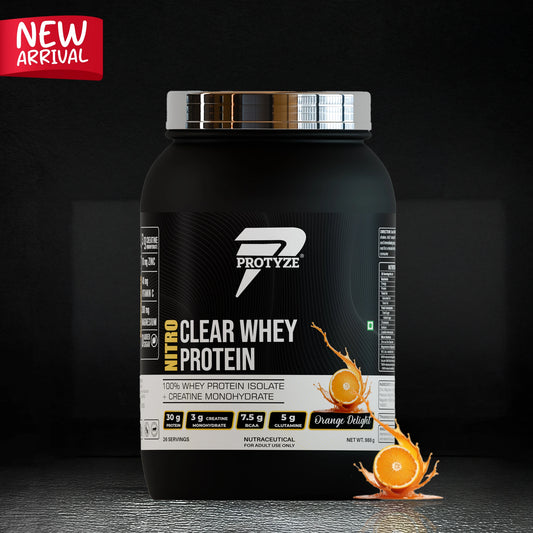
| Nitro Clear Whey | 30g | 3g creatine monohydrate and 5g glutamine |
| Diet Clear Whey | 15g | Probiotics and L-Carnitine |
| Hydra Clear Whey | 20g | Electrolytes |
Verify current flavour-specific product labels before publication.
For people who prefer a refreshing alternative to conventional protein shakes, Protyze is worth considering as a convenient way to include protein in their daily routine.
Explore the Protyze Clear Whey Protein collection to discover available formulations and flavours.
8. Common Muscle-Building Mistakes to Avoid
Choosing the right supplement is only one part of building muscle. Your overall routine matters just as much.
Avoid these common mistakes:
1. Focusing Only on Supplements
Protein supplements cannot replace a balanced diet or consistent resistance training.
2. Not Tracking Daily Protein Intake
Without understanding your food intake, it can be difficult to know whether you actually need additional protein.
3. Consuming Too Little Overall Food
Adequate protein is important, but your total energy intake also influences muscle development.
4. Ignoring Progressive Training
Muscles need an appropriate training stimulus. Gradually increasing training demands, while maintaining proper technique, helps support adaptation.
5. Neglecting Sleep and Recovery
Recovery is an essential part of a muscle-building routine. Consistent sleep and appropriate rest between training sessions matter.
6. Expecting Immediate Results
Muscle development takes time. Consistency with training, nutrition and recovery is more valuable than frequently changing supplements.
Frequently Asked Questions
How do I choose the right isolate protein for muscle gain?
Check protein per serving, essential amino acid information, ingredients, quality documentation and cost per gram of protein. Choose a product that fits your nutritional requirements and preferences.
How much protein do I need daily to build muscle?
For many exercising adults, approximately 1.4–2.0g per kilogram of body weight per day is a commonly cited range. Individual requirements vary.
Can beginners use isolate protein?
Yes. Beginners can use protein supplements if they need additional dietary protein. However, supplementation is not essential if their daily requirements are already met through food.
Is clear protein suitable for muscle gain?
Clear protein can contribute to muscle development when it provides adequate complete protein and is combined with resistance training and appropriate nutrition.
Is Protyze suitable for daily protein supplementation?
Protyze Anytime Clear Whey Isolate provides 24g protein per serving according to its stated formulation. It can be used as a convenient protein source within a balanced diet, depending on individual nutritional requirements.
Should I consume protein on rest days?
Yes. Protein remains important on rest days because muscle repair and adaptation continue during recovery.
Is protein powder necessary for muscle growth?
No. You can build muscle by meeting your nutritional requirements through regular food. Protein supplements are convenient options when dietary intake is insufficient.
Final Thoughts: Build Your Muscle Nutrition Routine Around Your Needs
Choosing the right protein supplement should begin with understanding your body weight, daily protein requirements, food intake and training goals.
Rather than focusing only on brand popularity or marketing claims, consider how a product fits into your overall nutrition routine.
Prioritize adequate protein, consistent resistance training, balanced meals and recovery.
If you prefer a refreshing alternative to conventional creamy protein shakes, clear protein products such as Protyze offer another way to incorporate protein into your daily routine.
Ultimately, the best supplement is one that meets a genuine nutritional need and helps you maintain consistency with your fitness goals.