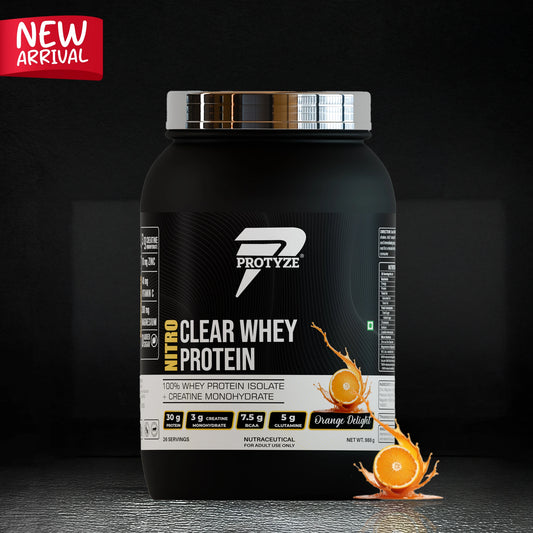

Whey protein isolate is a milk-derived protein ingredient widely used in nutritional products and protein supplements. It is known for its high protein concentration and complete amino acid profile, making it an important source of dietary protein.
Although whey protein isolate is commonly associated with fitness and exercise, understanding it involves more than knowing how much protein a serving contains. Its origin, manufacturing process, nutritional composition and role in the body all contribute to what makes this ingredient different.
In this guide, we explore what whey protein isolate is, how it is produced, what it contains, how the body uses its amino acids and what to understand about its place in everyday nutrition.
1. What Is Whey Protein Isolate?
Whey protein isolate (WPI) is a dairy-derived protein ingredient obtained from whey, the liquid portion of milk that remains after the curds are separated during cheese production.
Whey naturally contains several components, including water, proteins, lactose, minerals and small amounts of fat. Through further processing, a substantial proportion of the non-protein components is removed, resulting in an ingredient with a higher concentration of protein.
As a general ingredient standard, whey protein isolate contains at least 90% protein on a dry-matter basis. Actual finished-product values can vary depending on moisture, formulation and processing.
Whey protein isolate is considered a complete protein because it contains all nine essential amino acids that the human body cannot produce in sufficient quantities on its own.
It is used in a range of applications, including:
-
Protein powders and nutritional supplements
-
Ready-to-drink protein beverages
-
High-protein food products
-
Nutrition bars and formulated foods
-
Certain dairy and bakery applications
In simple terms: Whey protein isolate is a highly concentrated form of milk-derived protein produced by separating whey proteins from many of the other components present in liquid whey.
2. Where Does Whey Protein Isolate Come From?
To understand whey protein isolate, it helps to understand where whey itself comes from.
Milk contains two main groups of proteins:
-
Casein: The primary protein group that forms the curds during cheese production.
-
Whey proteins: The proteins that remain in the liquid portion after the curds separate.
During cheese manufacturing, milk undergoes a process that separates solid curds from liquid whey. The whey is collected and processed further to produce different whey protein ingredients.
Whey is not a single protein. It contains several protein fractions, each with its own characteristics.
Some of the major whey protein fractions include:
-
Beta-lactoglobulin
-
Alpha-lactalbumin
-
Immunoglobulins
-
Bovine serum albumin
-
Glycomacropeptide, depending on the processing and source
These proteins contribute to the overall amino acid composition of whey protein ingredients.
3. How Is Whey Protein Isolate Made?
Whey protein isolate is produced through a series of separation and concentration processes. The exact manufacturing method can differ between producers.
The main objective is to increase the proportion of protein while reducing the relative amount of lactose, fat, minerals and other non-protein components.
Step 1: Whey collection
During cheese production, liquid whey is separated from the solid curds.
The collected whey contains water, whey proteins, lactose, minerals and other naturally occurring components.
Step 2: Initial processing
The liquid whey is processed to prepare it for further separation. This may include clarification and other processing steps to remove unwanted particles and prepare the material for filtration.
Step 3: Filtration and separation
Specialised filtration systems are used to separate protein from other components.
Common processing methods include:
-
Microfiltration: Uses membranes to separate certain particles and components based on size.
-
Ultrafiltration: Helps concentrate proteins while allowing smaller components to pass through the membrane.
-
Diafiltration: Uses additional water during membrane processing to help remove more of the smaller dissolved components.
Ion-exchange technology may also be used in some manufacturing processes.
Step 4: Concentration
Further processing increases the proportion of whey protein in the ingredient.
The amount of lactose, fat, minerals and other components remaining depends on the processing method and the desired ingredient specifications.
Step 5: Drying
The concentrated liquid protein is commonly converted into powder using spray drying.
The resulting whey protein isolate powder can then be used in nutritional products and other food applications.
Why does the manufacturing process matter?
The manufacturing process influences the final ingredient's:
-
Protein concentration
-
Lactose and carbohydrate content
-
Fat content
-
Solubility and dispersibility
-
Functional and processing properties
This is why whey protein isolate is defined not simply by its name, but also by its composition and manufacturing specifications.
4. Nutritional Composition of Whey Protein Isolate
Whey protein isolate is primarily valued for its protein content and amino acid composition.
However, its complete nutritional profile includes more than just protein.
Protein content
Whey protein isolate is generally characterised by a high protein concentration.
The actual protein per serving depends on the amount of powder used and the product formulation.
For example, a serving of powder weighing 30g does not automatically contain 30g of protein. The remaining weight may include moisture, flavouring ingredients, sweeteners, minerals and other components.
This is why the protein quantity stated on the nutrition label is more meaningful than the total serving weight.
Essential amino acids
Whey protein isolate contains all nine essential amino acids.
These are:
-
Histidine
-
Isoleucine
-
Leucine
-
Lysine
-
Methionine
-
Phenylalanine
-
Threonine
-
Tryptophan
-
Valine
Essential amino acids are required for protein synthesis and several other functions in the body.
Branched-chain amino acids (BCAAs)
Three of the essential amino acids are known as branched-chain amino acids:
-
Leucine
-
Isoleucine
-
Valine
They are called branched-chain amino acids because of their molecular structure.
Leucine plays an important role in regulating muscle protein synthesis. Isoleucine and valine also contribute to normal protein metabolism and other physiological processes.
Whey naturally contains these amino acids as part of its protein composition.
Lactose
Lactose is the naturally occurring sugar found in milk.
During the production of whey protein isolate, processing removes much of the lactose present in the original whey. However, the amount remaining can vary.
Whey protein isolate should therefore not automatically be described as completely lactose-free.
Fat and carbohydrates
Whey protein isolate generally contains relatively low amounts of fat and carbohydrates compared with less extensively processed whey ingredients.
The actual values depend on the raw ingredient, manufacturing process and finished-product formulation.
Calories
Protein provides approximately four calories per gram.
The total calories in a whey protein isolate product depend on its protein, carbohydrate and fat content, along with any additional ingredients.
For an accurate nutritional assessment, the full nutrition panel should always be considered.
5. Understanding the Amino Acid Profile of Whey Protein Isolate
Amino acids are the building blocks of proteins. When dietary proteins are digested, they are broken down into amino acids and smaller peptides that the body can absorb.
These amino acids are then used for several biological processes, including the formation and maintenance of body proteins.
What makes essential amino acids important?
The body can produce some amino acids on its own, but essential amino acids must come from dietary sources.
They are involved in:
-
Building and maintaining body tissues
-
Producing enzymes and certain hormones
-
Supporting normal metabolic functions
-
Maintaining and repairing muscle tissue
-
Supporting the body's protein synthesis processes
Because whey protein isolate contains all nine essential amino acids, it is classified as a complete protein.
What is leucine's role?
Leucine is one of the essential amino acids found in whey protein.
It plays an important signalling role in muscle protein synthesis, a process through which the body builds new muscle proteins.
However, leucine does not work in isolation. The body requires the full range of essential amino acids to support the production of new proteins.
This is one reason why the overall amino acid profile matters when understanding dietary protein.
6. How Does the Body Use Whey Protein Isolate?
After consuming whey protein isolate, the digestive system breaks its proteins down into smaller peptides and amino acids.
These products of digestion are absorbed through the small intestine and enter circulation, where they become available to different tissues.
The body uses amino acids for several purposes.
Protein synthesis
Protein synthesis is the process through which cells build proteins from amino acids.
It is essential for maintaining and renewing body tissues, including muscle tissue.
Tissue maintenance and repair
The body continuously breaks down and replaces proteins in its tissues.
Dietary protein supplies amino acids that help support these ongoing processes.
Enzyme and protein production
Amino acids are also used to produce enzymes, transport proteins and other compounds involved in normal body functions.
Nitrogen balance
Protein contains nitrogen, which is used in the formation of many important compounds.
The balance between nitrogen entering the body through dietary protein and nitrogen leaving through normal metabolic processes is known as nitrogen balance.
Adequate protein intake helps support normal protein metabolism.
7. What Are the Nutritional Benefits of Whey Protein Isolate?
The benefits associated with whey protein isolate are primarily linked to its concentrated protein content and complete amino acid profile.
1. Provides a concentrated source of protein
Whey protein isolate supplies a substantial amount of protein relative to its powder weight.
This can be useful when someone wants to increase dietary protein without significantly increasing the quantity of food they need to prepare.
2. Supplies all nine essential amino acids
Whey protein isolate is a complete protein source.
Its essential amino acids contribute to the body's normal processes of protein synthesis, tissue maintenance and repair.
3. Contributes to muscle protein synthesis
Dietary protein supplies the amino acids required for muscle protein synthesis.
When combined with appropriate physical activity and sufficient overall nutrition, adequate protein intake supports the maintenance and development of muscle tissue.
4. Contains naturally occurring BCAAs
Whey protein naturally contains leucine, isoleucine and valine.
These amino acids are involved in protein metabolism, with leucine playing an important role in regulating muscle protein synthesis.
5. Can help increase daily protein intake
People who find it difficult to obtain enough protein through their regular meals may use protein-containing foods or supplements to help meet their dietary requirements.
Whey protein isolate is one possible source, but it is not essential for everyone.
8. How Does Whey Protein Isolate Fit Into Everyday Nutrition?
Protein is an essential macronutrient required throughout life.
It contributes to the formation and maintenance of muscles, skin, enzymes, hormones and other body structures.
Whey protein isolate is one way of obtaining dietary protein, but it should be understood as part of the broader diet rather than a replacement for regular food.
Protein from everyday foods
Several commonly available foods provide protein.
Examples include:
| Food | Protein contribution |
|---|---|
| Eggs | High-quality complete protein |
| Milk and curd | Dairy protein |
| Paneer | Dairy protein |
| Chicken | Animal-based complete protein |
| Fish | Animal-based complete protein |
| Soybeans and tofu | Plant-based protein |
| Lentils and beans | Plant-based protein |
| Chickpeas | Plant-based protein |
The amount of protein varies according to the food, portion size and preparation method.
Why does dietary variety matter?
Different foods provide different combinations of nutrients.
Along with protein, whole foods can supply dietary fibre, vitamins, minerals, healthy fats and other important nutrients.
A balanced diet should therefore include a variety of foods rather than depending on a single protein source.
Whey protein isolate can contribute to overall protein intake when needed, but it does not replace the nutritional variety of a balanced diet.
9. How Much Protein Does the Body Need?
Protein requirements differ from person to person.
Factors that can influence daily protein needs include:
-
Age
-
Body weight
-
Physical activity
-
Training intensity
-
Overall dietary intake
-
Health and individual nutritional circumstances
For healthy exercising adults, the International Society of Sports Nutrition discusses a general daily protein intake range of approximately 1.4–2.0g per kilogram of body weight.
This is a reference range for exercising individuals, not a universal requirement for everyone.
For example, a physically active adult weighing 70kg could use this range as an illustrative reference:
| Body weight | Illustrative daily protein range |
|---|---|
| 50kg | 70–100g |
| 60kg | 84–120g |
| 70kg | 98–140g |
| 80kg | 112–160g |
Individual requirements may be lower or higher depending on personal circumstances.
Importantly, these figures represent total daily protein from all sources, including regular food and supplements. They do not represent the amount of whey protein isolate someone should consume.
10. Is Whey Protein Isolate Suitable for Everyone?
Whey protein isolate is a milk-derived ingredient. Although many people can include it in their diets, it is not appropriate for everyone.
A few considerations are important.
Milk protein allergy
People with a milk protein allergy should avoid whey protein isolate unless specifically advised otherwise by their healthcare professional.
Whey is derived from milk and contains milk proteins.
Lactose intolerance
Whey protein isolate generally contains less lactose than many other whey ingredients.
However, the amount varies by product, and it should not automatically be considered lactose-free.
People with lactose intolerance may have different levels of tolerance.
Digestive tolerance
Individual digestive responses can vary depending on the product formulation, serving size and other ingredients.
Flavouring agents, sweeteners and additional ingredients may also influence an individual's experience.
Existing medical conditions
People with kidney disease or other medical conditions that require dietary protein restrictions should consult a qualified healthcare professional before significantly changing their protein intake.
Dietary preferences
Since whey protein isolate is derived from milk, it is suitable for many people who consume dairy but is not suitable for a vegan diet.
11. Common Myths About Whey Protein Isolate
There are several misconceptions about whey protein isolate. Understanding the facts can help readers make more informed nutritional decisions.
Myth 1: Whey protein isolate is an artificial protein
Fact: Whey protein isolate is derived from milk. It is produced by processing the naturally occurring whey proteins found in liquid whey.
Myth 2: Whey protein isolate contains only one type of protein
Fact: Whey protein isolate contains multiple protein fractions, including beta-lactoglobulin and alpha-lactalbumin.
Myth 3: Whey protein isolate is completely lactose-free
Fact: Processing removes much of the lactose, but residual amounts may remain. The actual quantity depends on the ingredient and finished product.
Myth 4: More protein automatically means better results
Fact: Protein intake needs to be considered in the context of overall nutrition, activity, health and individual requirements. Consuming more than the body needs does not guarantee additional benefits.
Myth 5: Protein supplements can replace a balanced diet
Fact: Protein supplements provide a concentrated source of protein, but they do not replace the variety of nutrients supplied by a balanced diet.
12. Frequently Asked Questions About Whey Protein Isolate
1. What exactly is whey protein isolate?
Whey protein isolate is a concentrated dairy protein ingredient obtained by processing liquid whey to remove a substantial proportion of its non-protein components. It generally contains at least 90% protein on a dry-matter basis.
2. Is whey protein isolate a complete protein?
Yes. Whey protein isolate contains all nine essential amino acids that must be obtained through the diet.
3. What is whey protein isolate made from?
It is made from whey, the liquid portion of milk separated from curds during cheese production.
4. How is whey protein isolate processed?
It is produced using separation techniques such as membrane filtration and, in some cases, ion exchange. The concentrated protein is subsequently dried into powder.
5. What amino acids are found in whey protein isolate?
Whey protein isolate contains all nine essential amino acids, including leucine, isoleucine, valine, lysine, methionine, phenylalanine, threonine, tryptophan and histidine.
6. Does whey protein isolate contain lactose?
It generally contains a relatively small amount of lactose because much of it is removed during processing. However, the residual quantity varies and the ingredient should not automatically be considered lactose-free.
7. Is whey protein isolate derived from milk?
Yes. Whey protein isolate is a dairy-derived ingredient obtained from the liquid whey produced during cheese manufacturing.
8. Can whey protein isolate be obtained through food?
Whey protein is naturally present in dairy products such as milk. However, whey protein isolate is a specifically processed ingredient that is not normally consumed as a separate ingredient in everyday unprocessed foods.
9. Does whey protein isolate contain BCAAs?
Yes. It naturally contains the branched-chain amino acids leucine, isoleucine and valine as part of its amino acid profile.
10. Is whey protein isolate suitable for vegans?
No. It is derived from milk and is therefore not suitable for a vegan diet.
11. Does whey protein isolate support muscle protein synthesis?
Yes. Its essential amino acids provide the building blocks required for muscle protein synthesis. Adequate total protein intake, physical activity and overall nutrition are also important.
12. Is whey protein isolate the same as a complete meal?
No. Whey protein isolate is a protein ingredient. It does not independently provide all the nutrients found in a balanced meal.
Conclusion
Whey protein isolate is a highly concentrated dairy protein ingredient with a complete amino acid profile. Its production involves separating whey proteins from many of the other components present in liquid whey, resulting in an ingredient widely used in nutritional products and food applications.
Understanding its origin, manufacturing process, nutritional composition and role in protein metabolism provides a clearer picture of why it is used in modern nutrition.
While whey protein isolate can contribute to daily protein intake, it should always be considered alongside regular food, balanced nutrition and individual dietary requirements.
The most important takeaway is that protein is an essential part of everyday nutrition, and understanding the ingredients behind protein products helps people make more informed decisions about what they consume.