
If regular protein shakes leave you bloated, gassy or running to the washroom, you've probably wondered whether clear whey is any different. It's still whey, and whey comes from milk, so how can it be "lactose-free"? The short answer: it comes down to how the protein is filtered. In this guide, we explain how much lactose clear whey really contains, whether clear whey isolate is safe for lactose intolerance, and how to choose the right one for your goals.
Quick Answer: Does Clear Whey Have Lactose?
Clear whey has very little lactose, but it isn't always completely lactose-free. Clear whey is made from whey protein isolate, which is filtered heavily to remove most of the lactose, fat and carbs. Many clear whey products contain only trace amounts of lactose, and some are labelled up to 99% lactose-free. Most people with lactose intolerance tolerate it well, but because lactose content varies by brand, always check the label.
One important point: lactose-free does not mean dairy-free. Clear whey still comes from milk, so anyone with a milk allergy should avoid it unless their doctor says otherwise.
What Is Clear Whey Protein?
Clear whey is a newer style of protein drink. Instead of a thick, milky shake, it mixes with water into a light, refreshing, juice-like drink. Here's how it's made:
Milk → Whey → Whey Protein Isolate → Clear Whey
The whey is filtered into an isolate, then further processed (often partly hydrolyzed) so it dissolves clear. Because it's so thoroughly filtered, it ends up high in protein and very low in lactose, fat and carbs.
Understanding Lactose Intolerance
Lactose is the natural sugar in milk. To digest it, your body needs an enzyme called lactase. People with lactose intolerance don't produce enough lactase, so undigested lactose ferments in the gut. Common symptoms include:
- Bloating and gas
- Stomach cramps
- Diarrhea or constipation
- Indigestion or nausea
Since whey is a dairy by-product, some lactose can carry over into protein powders. How much depends on the type of whey.
Is Whey Protein Isolate Lactose-Free? Whey Types Compared
|
Type of Whey |
Lactose Content |
Suitable for Lactose Intolerance? |
|---|---|---|
|
Whey Concentrate |
Higher |
Usually not recommended |
|
Whey Isolate |
Low |
Often suitable, but very sensitive people may react |
|
Clear Whey Isolate |
Very low (trace amounts) |
Best choice for most people |
Whey concentrate keeps more lactose, fat and carbs, which is why it often causes discomfort. Whey isolate is filtered further, so it's much lower in lactose. Clear whey isolate is filtered and processed even more, making it the gentlest option for most lactose-sensitive people.
Lactose-Free vs. Dairy-Free: What's the Difference?
These terms are often confused, but they mean different things:
- Lactose-free means the product contains little or no lactose, depending on the brand's claim.
- Dairy-free means there are no milk-derived ingredients at all.
Clear whey can be lactose-free (or very close to it) and still be a dairy product. If you're vegan, allergic to milk protein, or avoid dairy completely, clear whey isn't the right choice. A plant-based protein would suit you better.
Why Regular Whey Can Upset Your Stomach
If traditional shakes don't agree with you, lactose isn't the only possible cause:
- Leftover lactose: Whey concentrate in particular carries more lactose into every scoop.
- Heavy, creamy texture: Thick shakes can feel heavy and leave you overly full, especially after a workout.
- Additives: Some powders contain sweeteners, gums or fillers that can irritate a sensitive stomach.
How Clear Whey Helps if You're Lactose Intolerant
- Advanced filtration: Ultra-filtration removes most of the lactose, fat and carbs while keeping the essential amino acids your muscles need.
- Fast absorption: Because clear whey is often partly hydrolysed, it digests and absorbs quickly, making it a good post-workout option.
- Light and refreshing: It mixes with water into a crisp drink with no creamy residue, which many people find easier on the stomach.
- Lean nutrition profile: Clear whey is typically low in calories, carbs and fat, which suits lean muscle and weight management goals.
Can Clear Whey Support Weight Loss and Gut Health?
Weight loss: Clear whey doesn't burn fat by itself. Fat loss comes from a consistent calorie deficit, along with enough protein, activity and sleep. What clear whey does well is help you hit your protein target with fewer calories, which helps protect muscle while you diet. It works in the morning, between meals or at night, as long as it fits your daily calorie and protein goals.
Gut health: Clear whey on its own isn't a gut-health supplement. Some products add probiotics, so if that matters to you, check the label for the specific strains and amounts.
Choosing the Right Protyze Clear Whey for Your Goal
|
Product |
Protein per Serving |
Best For |
|---|---|---|
|
Anytime Clear |
24 g |
Everyday protein, post-workout; 99% lactose-free, 100 calories, 0 g added sugar |
|
Diet Clear |
15 g |
Weight management and digestion; added probiotics, L-carnitine and fibre |
|
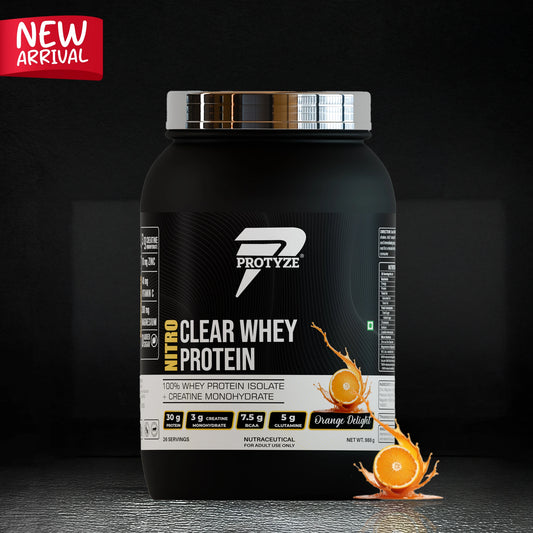
Nitro Clear |
30 g |
Strength and performance; added creatine |
|
Hydra Clear |
20 g |
Hydration during training; added electrolytes |
How and When to Take Clear Whey
There's no single "best" time. Total daily protein matters more than timing. Popular options include:
- After workouts: Mix one scoop with cold water to support recovery.
- Before training: Sip it about 30 minutes before your session for hydration and amino acids.
- With breakfast or between meals: An easy way to raise your daily protein intake.
Who Should Use Clear Whey Protein?
- People with lactose intolerance who struggle with regular whey
- Anyone who feels bloated or heavy after traditional shakes
- Athletes and gym-goers who want fast post-workout recovery
- People who prefer a light, refreshing drink to a thick shake
- Anyone looking for a high-protein, low-calorie option
Side Effects and Safety
Most people tolerate clear whey well. Some may still notice mild digestive discomfort, especially if they're very sensitive to lactose. Start with half a scoop to see how your body responds. If you have a diagnosed milk allergy or severe lactose intolerance, talk to your doctor or a registered dietitian before using any whey-based product.
Frequently Asked Questions
1. Does clear whey have lactose?
Clear whey contains very little lactose because it's made from heavily filtered whey isolate. Some products are labelled up to 99% lactose-free.
2. Is clear whey isolate completely lactose-free?
Not always. Most contain only trace amounts, which the majority of lactose-intolerant people tolerate well. Check each product's label.
3. Is whey protein isolate lactose-free?
Regular whey isolate is low in lactose but usually contains a little more than clear whey isolate. Very sensitive people may still notice symptoms.
4. Is clear whey dairy-free?
No. Clear whey is made from milk, so it isn't suitable for people with a milk allergy or those who avoid dairy completely.
5. Can lactose-intolerant people drink clear whey?
Most can. Start with a small serving and check how your body reacts. If you have severe intolerance, ask your doctor first.
6. Does clear whey cause bloating?
It's less likely to cause bloating than whey concentrate because it's lower in lactose and lighter in texture, but individual reactions vary.
7. Is clear whey good for weight loss?
It can help as part of a calorie-controlled, high-protein diet because it's low in calories, carbs and fat. It doesn't burn fat on its own.
8. How is clear whey different from plant protein?
Clear whey is a complete, fast-absorbing dairy protein with a light texture. Plant protein is dairy-free, making it the better choice for vegans or people with a milk allergy.
Conclusion
So, does clear whey have lactose? Only in very small amounts. Thanks to heavy filtration, clear whey isolate is one of the most stomach-friendly protein options available, and most lactose-intolerant people can enjoy it without the bloating that regular shakes cause. Just remember that it's still a dairy product, check the label for lactose content, and choose the formula that matches your goal.