
Quick answer
Mix whey protein with water if you want fewer calories, faster digestion and a lighter drink, which suits weight loss and post-workout shakes. Mix it with milk if you want extra protein and calories for muscle gain or weight gain. Both work. The best choice depends on your goal, not on which is "healthier".
It's one of the most common questions new protein users ask: should you take whey protein with milk or water? Here's a clear breakdown of the real difference, with numbers, so you can pick what suits you.
Should You Take Whey Protein With Milk or Water?
The protein from your scoop stays the same either way. What changes is everything the liquid adds. Here's what 250 ml of each brings to one scoop of whey (about 24g protein):
|
Mixed with 250 ml of |
Extra calories |
Extra protein |
Extra carbs |
Extra fat |
|---|---|---|---|---|
|
Water |
0 kcal |
0g |
0g |
0g |
|
Skimmed milk |
~85 kcal |
~8.5g |
~12g |
~0.5g |
|
Toned milk (3% fat) |
~145 kcal |
~8g |
~12g |
~7.5g |
|
Full-cream milk |
~215 kcal |
~8g |
~12g |
~15g |
Values are approximate and vary by brand. Check your milk pack's label.
So a shake with full-cream milk can have nearly double the calories of the same shake with water. That difference matters more than most people expect, especially if you drink one or two shakes a day.
Protein With Milk or Water: Which Is Better for Muscle Gain?
If you're trying to build muscle or gain weight, protein with milk has a clear edge. A glass of milk adds about 8g of high-quality protein plus calories your body needs to grow. Milk protein is mostly casein, which digests slowly and keeps releasing amino acids for hours.
Milk is a good choice when:
- You're a hard gainer who struggles to eat enough calories.
- You're having your shake as a breakfast or meal replacement.
- You want a bedtime shake, where slow-digesting casein helps.
That said, milk isn't required for muscle gain. If your meals already give you enough calories, a shake with water works just as well. What builds muscle is your total daily protein, enough calories and consistent strength training.
Protein Powder With Milk or Water for Weight Loss?
For weight loss, protein powder with water is usually the smarter pick. You get the full protein dose for around 100–120 kcal instead of 250–330 kcal with milk.
That saving adds up. One daily shake with toned milk instead of water adds about 1,000 extra calories a week. That's enough to slow fat loss noticeably if you're in a calorie deficit.
Protein still keeps you full either way, because the scoop's protein is what reduces hunger. Water simply lets you have that benefit without the extra calories from milk fat and lactose.
Whey Protein in Water or Milk: Digestion, Lactose and Timing
Digestion speed. Whey protein in water digests fast, with amino acids in your blood peaking in about an hour. Milk's fat and casein slow this down. That makes water better right after a workout, and milk better when you want a slow, steady supply.
Lactose and bloating. A 250 ml glass of milk contains about 12g of lactose. Many Indian adults digest lactose poorly, so a milk shake can cause bloating, gas or a heavy stomach. If that sounds familiar, switch to water and choose a whey isolate, which contains very little lactose. Our guide on whey protein and lactose intolerance explains more.
Taste and texture. Milk makes a thick, creamy shake that tastes richer. Water gives a thinner, lighter drink. Use cold water and shake well for the best result.
|
Situation |
Better choice |
|---|---|
|
Right after a workout |
Water |
|
Weight loss or cutting |
Water |
|
Lactose sensitivity or bloating |
Water |
|
Muscle or weight gain |
Milk |
|
Meal replacement or breakfast |
Milk |
|
Before bed |
Milk |
What About Clear Whey Protein?
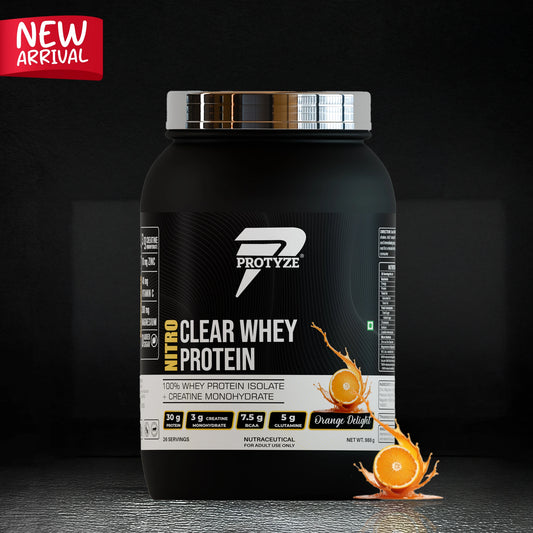
Clear whey is the one protein powder where the milk or water question has a simple answer: always water. Clear whey isolate is made to mix into a light, transparent, juice-like drink. Its fruity, slightly tangy flavours don't go well with milk, and mixing them can make the drink taste odd or curdle.
The upside is that you skip the milk calories and lactose completely. Protyze Anytime Clear Whey gives 24g protein in about 300–400 ml of cold water, with no heavy, milky feeling. That makes it easy to drink after a workout, between meals or on a hot day.
FAQs
Is whey protein with milk or water better?
Neither is better for everyone. Water is better for weight loss, fast digestion and lactose sensitivity. Milk is better for muscle gain, weight gain and meal replacement.
Does mixing protein with milk reduce absorption?
No. You still absorb the same protein. Milk only slows digestion, so amino acids reach your muscles more gradually.
Can I mix protein powder with half milk and half water?
Yes. It's a good middle path if water feels too thin but full milk adds too many calories.
Can I use plant milk instead?
Yes. Unsweetened soy milk adds protein, while almond or oat milk adds fewer calories but little protein.
The Bottom Line
The real difference between milk and water in your protein shake is calories, digestion speed and lactose. Choose water to keep your shake light, fast and low-calorie. Choose milk when you need extra protein and energy. Either way, the protein in your scoop does the main job.
Want a protein shake that's light, refreshing and made for water? Explore Protyze clear whey protein, with 15–30g protein per serving in fruity flavours.