
Starting the gym is exciting.
You begin lifting weights, tracking calories, watching fitness videos, and trying to eat “healthy.”
But even after doing all this, many beginners still fail to consume enough protein daily.
And that becomes one of the biggest reasons why:
- muscle growth feels slow,
- recovery takes longer,
- energy levels stay low,
- and body transformation doesn’t happen as expected.
The surprising part?
Most people think they are already eating enough protein from regular food.
Unfortunately, in reality, they are not.
The Hidden Protein Deficiency Problem in India
Indian diets are often rich in:
- rice,
- rotis,
- carbs,
- oils,
- and sugars,
but relatively lower in high-quality protein.
Even people who:
- eat chicken occasionally,
- consume milk daily,
- or workout regularly,
still fail to meet optimal protein intake.
This becomes even more important once you start exercising because your body’s protein requirement increases significantly during:
- muscle repair,
- recovery,
- strength building,
- and fat loss.
How Much Protein Does a Beginner Actually Need?
Most beginners underestimate how much protein the body truly requires for muscle recovery and growth.
For active gym beginners, the recommended intake is:
1.6 to 2.2 g/kg of body weight per day
That means:
|
Body Weight |
Protein Needed Daily |
|
50 kg |
80–110g |
|
60 kg |
96–132g |
|
70 kg |
112–154g |
|
80 kg |
128–176g |
Now compare that to what most beginners actually consume.
Why Food Alone Often Isn’t Enough
Most people assume:
“I eat eggs and chicken, so I’m already getting enough protein.”
But when you calculate actual intake, the numbers are usually much lower than expected.
Typical Daily Protein Intake of a Beginner
| Common Daily Foods | Quantity | Protein Approx |
| 2 Whole Eggs | 1 serving | 12g |
| 1 Glass Milk | 250ml | 6g |
| 1 Bowl Dal | 1 serving | 7–9g |
| 100g Chicken | 1 serving | 25–27g |
| 100g Paneer | 1 serving | 18g |
| 2 Rotis + Sabzi | 1 meal | 6–8g |
Total Daily Protein:
Approximately 55–65g only
Actual Requirement for Gym Beginners:
Approximately 100–140g+
This is exactly where the protein gap starts.
The Biggest Problem: Consistency
Even when people know they need more protein, consistency becomes difficult.
Because realistically:
- cooking protein-rich meals daily takes effort,
- office schedules become hectic,
- college routines are inconsistent,
- appetite fluctuates,
- and eating chicken or eggs repeatedly becomes boring.
This leads to low protein intake for months without people realizing it.
And when protein intake stays low:
- muscles recover slower,
- soreness increases,
- energy drops,
- and gym progress feels disappointing.
How the Body Actually Uses Protein
Protein is made up of amino acids — the building blocks your body needs for:
- muscle repair,
- strength,
- recovery,
- hormones,
- metabolism,
- and immunity.
After consuming protein:
- The digestive system breaks it into amino acids.
- These amino acids enter the bloodstream.
- Muscles absorb them to recover and rebuild.
But your body requires a steady supply of protein consistently throughout the day.
If intake remains too low:
- muscle recovery slows,
- muscle growth becomes inefficient,
- and performance declines.
Why Many Beginners Struggle With Traditional Protein Powders
Once beginners realize they need more protein, they often try whey protein powders.
But traditional protein shakes can feel:
- too thick,
- too heavy,
- difficult to digest,
- bloating for some users,
- and uncomfortable during summer.
Many people stop consuming protein consistently because they simply don’t enjoy heavy milkshake-style whey.
That’s one of the biggest reasons clear whey protein is rapidly becoming popular.
What Makes Clear Whey Protein Different?
Unlike traditional creamy protein shakes, clear whey protein feels:
- light,
- refreshing,
- juice-like,
- easier to drink,
- and smoother on digestion.
Especially in Indian weather, many beginners prefer lighter protein options they can consume daily without heaviness.
Food vs Traditional Whey vs Clear Whey
| Factor | Whole Foods | Traditional Whey | Clear Whey Protein |
| Convenience | Low | Medium | High |
| Digestion Speed | Moderate | Moderate | Easy & Light |
| Texture | Solid Food | Thick Shake | Juice-like |
| Protein Density | Moderate | High | High |
| Portability | Low | Medium | High |
| Summer Friendly | Medium | Low | High |
| Beginner Friendly | Moderate | Moderate | Very High |
This is why clear protein has become easier for many beginners to consume consistently.
Whey Concentrate vs Isolate vs Clear Whey
Many beginners also get confused between different types of whey proteins.
Here’s a simple breakdown:
| Type | Protein % | Texture | Lactose | Digestion | Best For |
| Whey Concentrate | 70–80% | Creamy | Moderate | Moderate | Budget users |
| Whey Isolate | 85–90% | Smooth | Low | Faster | Lean muscle |
| Clear Whey Isolate | 85–90% | Juice-like | Low | Very Easy | Beginners & summer use |
For beginners who struggle with heavy shakes, clear whey isolate often feels much easier to consume regularly.
How Protyze Is Helping Solve Daily Protein Deficiency
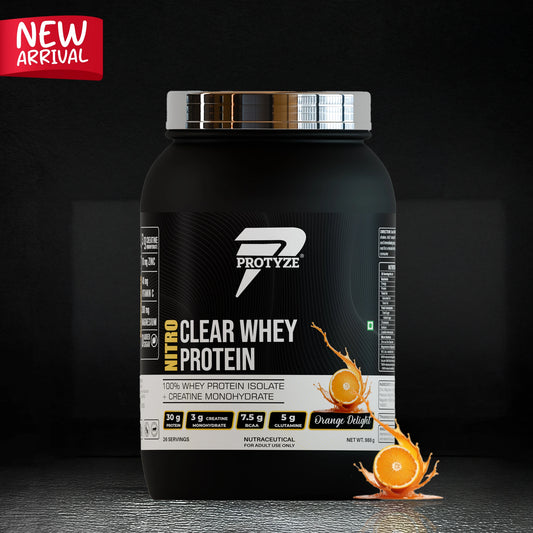
Protyze introduced clear protein in India with the goal of making daily protein intake simpler, lighter, and more enjoyable.
Instead of traditional thick whey shakes, Protyze Clear Whey offers:
- high-quality whey isolate protein,
- a refreshing juice-like experience,
- lighter digestion,
- quick mixing,
- and easy daily consumption.
This becomes especially useful for people who:
- skip meals,
- struggle to cook high-protein foods,
- dislike thick protein shakes,
- or simply fail to hit their daily protein target consistently.
Rather than replacing whole foods, clear protein helps bridge the gap between actual intake and optimal protein requirements.
Food Should Always Come First But Protein Gaps Are Real
Whole foods remain extremely important.
Foods like:
- eggs,
- fish,
- chicken,
- paneer,
- curd,
- lentils,
- milk,
- and soy
should always be part of a balanced diet.
But realistically, many gym beginners still fail to consistently reach 100g+ protein daily through food alone.
That’s why whey protein powder is called a supplement:
it supplements your protein intake.
Not replaces your meals.
Signs You May Not Be Getting Enough Protein
Many beginners ignore early signs of low protein intake, including:
- slow recovery,
- low strength progression,
- constant muscle soreness,
- frequent hunger,
- fatigue,
- low energy,
- hair fall,
- or poor gym performance.
These can sometimes indicate insufficient protein intake.
Best Ways to Increase Daily Protein Intake
1. Add Protein to Every Meal
Don’t rely on one heavy dinner.
Spread protein intake across the day.
2. Choose Convenient Protein Sources
Convenience improves consistency.
3. Track Your Intake
Most beginners underestimate how little protein they consume.
4. Use Whey Protein Smartly
A good whey isolate protein can help fill daily protein gaps effectively.
5. Stay Hydrated
Hydration supports protein metabolism and recovery.
Is Whey Protein Necessary for Beginners?
Not mandatory — but extremely useful.
Especially if:
- you struggle to meet protein goals from food,
- have a busy schedule,
- want better recovery,
- or need a convenient source of high-quality protein.
The best protein is ultimately the one you can consume consistently.
Why Clear Whey Protein Is Growing Fast in India
Modern consumers now prefer:
- lighter nutrition,
- better digestion,
- refreshing flavors,
- convenient protein intake,
- and less heaviness.
That’s why clear whey protein is rapidly growing in India — especially among beginners and fitness-focused users.
Final Thoughts
Many gym beginners work hard in the gym but still fail to see results because their daily protein intake remains too low.
And most of the time, they don’t even realize it.
While whole foods should always remain the foundation of your nutrition, supplements like clear whey protein can make it much easier to consistently meet your daily protein requirements.
The easier protein becomes to consume daily, the easier it becomes to stay consistent with your fitness goals.